




 Bangladesh’s former Prime Minister Begum Khaleda Zia, who many believed would sweep elections next year to lead her country once again, has died after a prolonged illness while under treatment at Evercare Hospital in Dhaka. She was 80. The chairperson of the Bangladesh Nationalist Party (BNP) breathed her last at 6 am on Tuesday, according to a statement issued by her party.
Zia was under treatment for the past 36 days since being admitted on November 23 with infections in her heart and lungs. She was also suffering from pneumonia, according to the Bangladeshi daily The Daily Star.
“The BNP Chairperson and former prime minister, the national leader Begum Khaleda Zia, passed away today at 6:00 am, just after the Fajr (dawn) prayer,” the party said in a statement.
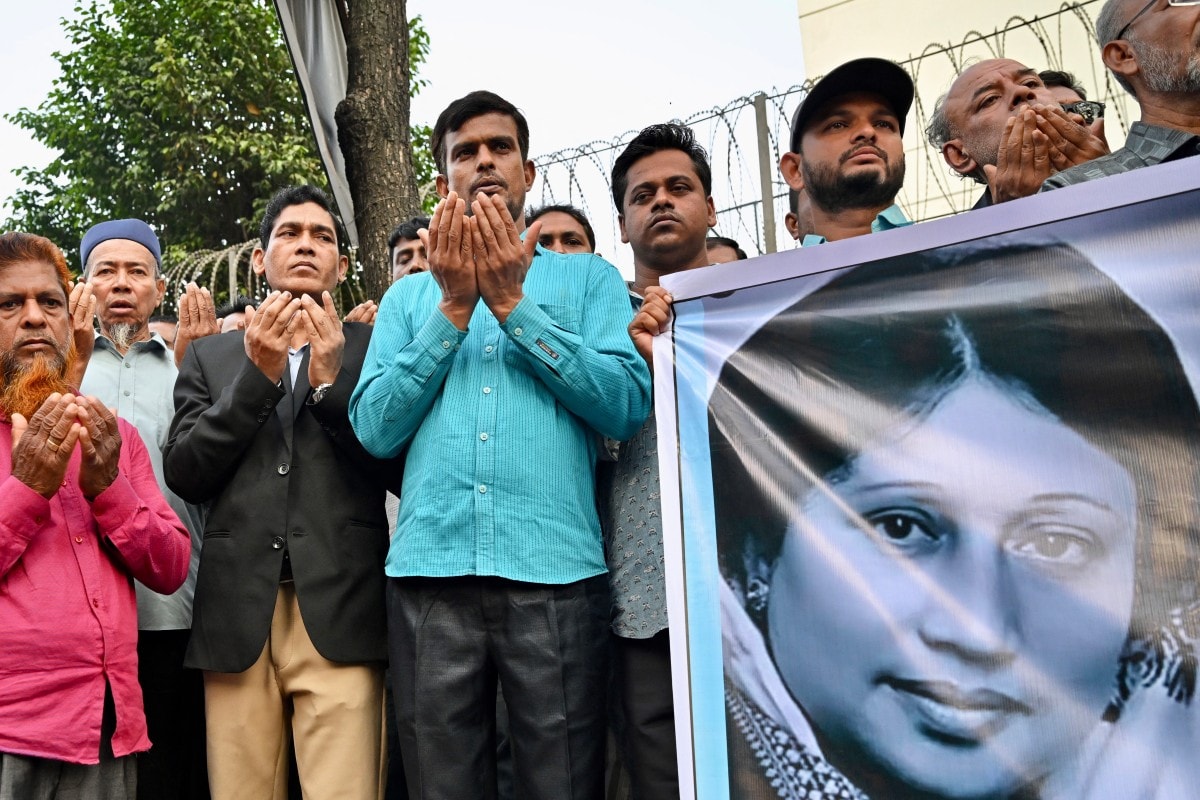
“We pray for the forgiveness of her soul and request everyone to offer prayers for her departed soul,” it added.
Zia, the first female prime minister of Bangladesh, had long been battling multiple health complications, including liver cirrhosis, arthritis, diabetes, and chronic issues affecting her kidneys, lungs, heart, and eyes. Her treatment was being overseen by specialists from Bangladesh, the UK, the US, China, and Australia.
Earlier this month, there was an initiative to take her abroad for treatment, but it could not proceed due to her fragile condition.
She left behind her elder son, Tarique Rahman, his wife, Zubaida Rahman, and their daughter, Zaima Rahman. Tarique Rahman returned to Bangladesh on December 25 after 17 years in exile. Zia’s younger son, Arafat Rahman Koko, died a few years ago in Malaysia.
PM Modi Sends Condolences
Prime Minister Narendra Modi expressed grief over Zia’s death. In a post on X, he wrote, “Deeply saddened to learn about the passing away of former Prime Minister and BNP Chairperson Begum Khaleda Zia in Dhaka.”
“Our sincerest condolences to her family and all the people of Bangladesh. May the Almighty grant her family the fortitude to bear this tragic loss,” he added.
PM Modi noted that as the first woman Prime Minister of Bangladesh, Zia’s important contributions towards the development of Bangladesh, as well as India-Bangladesh relations, will always be remembered.
“I recall my warm meeting with her in Dhaka in 2015. We hope that her vision and legacy will continue to guide our partnership. May her soul rest in peace,” he wrote.
About Khaleda Zia
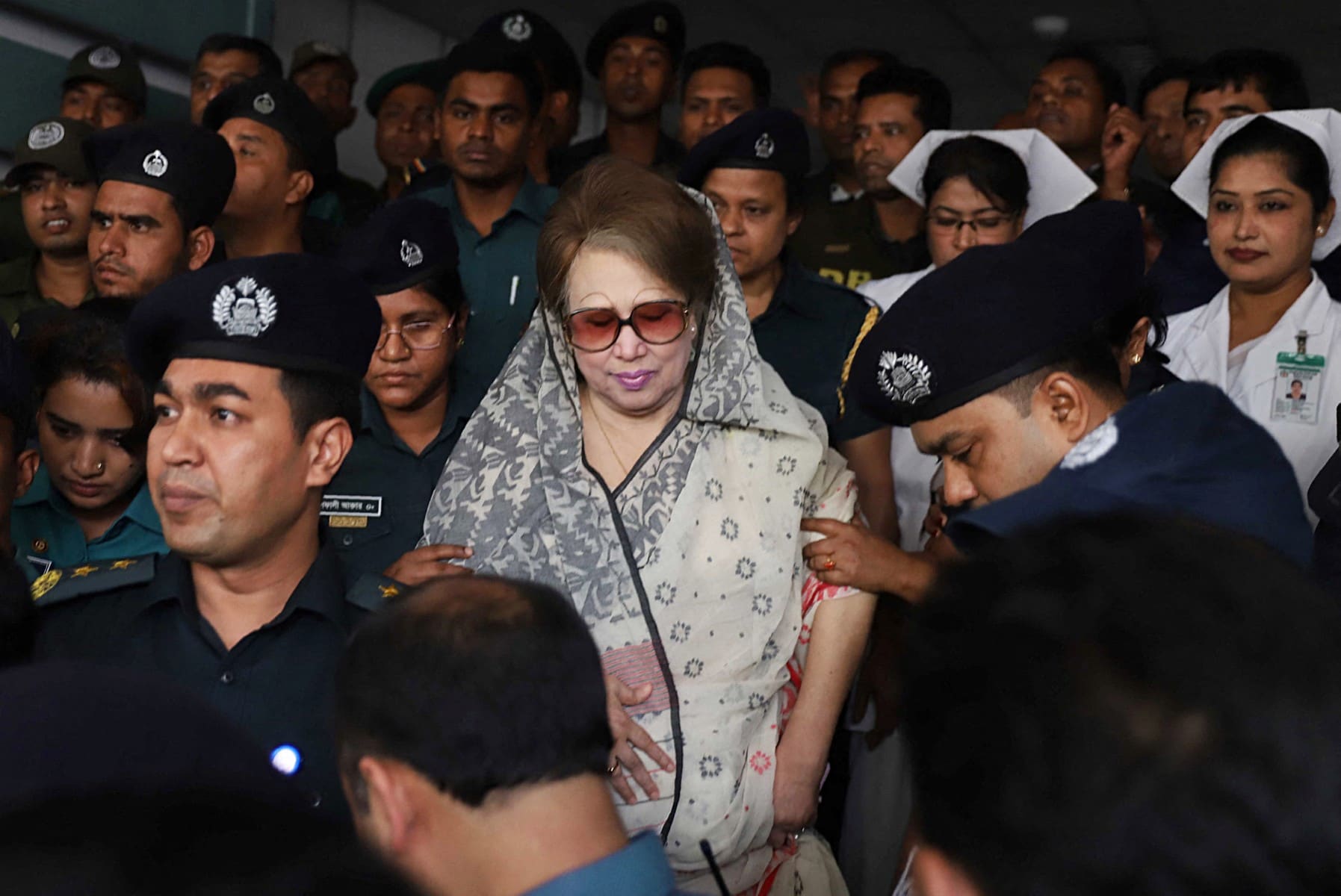
Photo Credit: AFP
Zia, the three-time prime minister of Bangladesh, formally started her political career after she assumed office through popular vote in the 1991 national election. She went on to introduce the parliamentary form of government and the caretaker government system in Bangladesh to oversee a free and fair election. She replaced the presidential system with a parliamentary one so that power rested with the prime minister. She also lifted restrictions on foreign investment and made primary education compulsory and free.
Born in Jalpaiguri, British India (now West Bengal), in 1945, Khaleda’s family moved to Dinajpur, East Bengal (now Bangladesh), after the partition in 1947. Her father, Iskandar Mazumder, was a businessman, and her mother, Tayeba Mazumder, was a housewife. Nicknamed “Putul,” she was the second among three sisters and two brothers.
After moving to East Pakistan, Zia attended Dinajpur Missionary School and later did her matriculation at Dinajpur Girls’ School in 1960.
She married Ziaur Rahman, then a captain in the Pakistan army, in 1960 and continued her education at Surendranath College of Dinajpur until 1965, before she moved to West Pakistan to join her husband. In 1971, when Bangladesh’s Liberation War started, Ziaur Rahman revolted and fought for an independent nation.
Ziaur Rahman was assassinated on May 30, 1981. After his death, his BNP faced a serious crisis. To keep the party together, Khaleda Zia, who was never in politics, joined BNP, which her husband had founded. She was elected her party’s vice-president on January 12, 1984. She was elected the party’s chairperson on May 10, 1984.
Zia joined hands with Sheikh Hasina, daughter of Bangladesh’s founding father and head of the Awami League party, to lead a popular uprising for democracy that toppled military ruler Hossain Mohammad Ershad in 1990.
But Zia and Hasina’s cooperation did not last long. Their bitter rivalry would lead to the two being dubbed “the battling Begums”-a phrase that uses an Urdu honorific for prominent women.
In the 1991 parliamentary election, BNP emerged as the single majority party, and Zia was sworn in as the first female prime minister of Bangladesh. She became the prime minister for a second consecutive term in 1996, but all major parties boycotted the results.
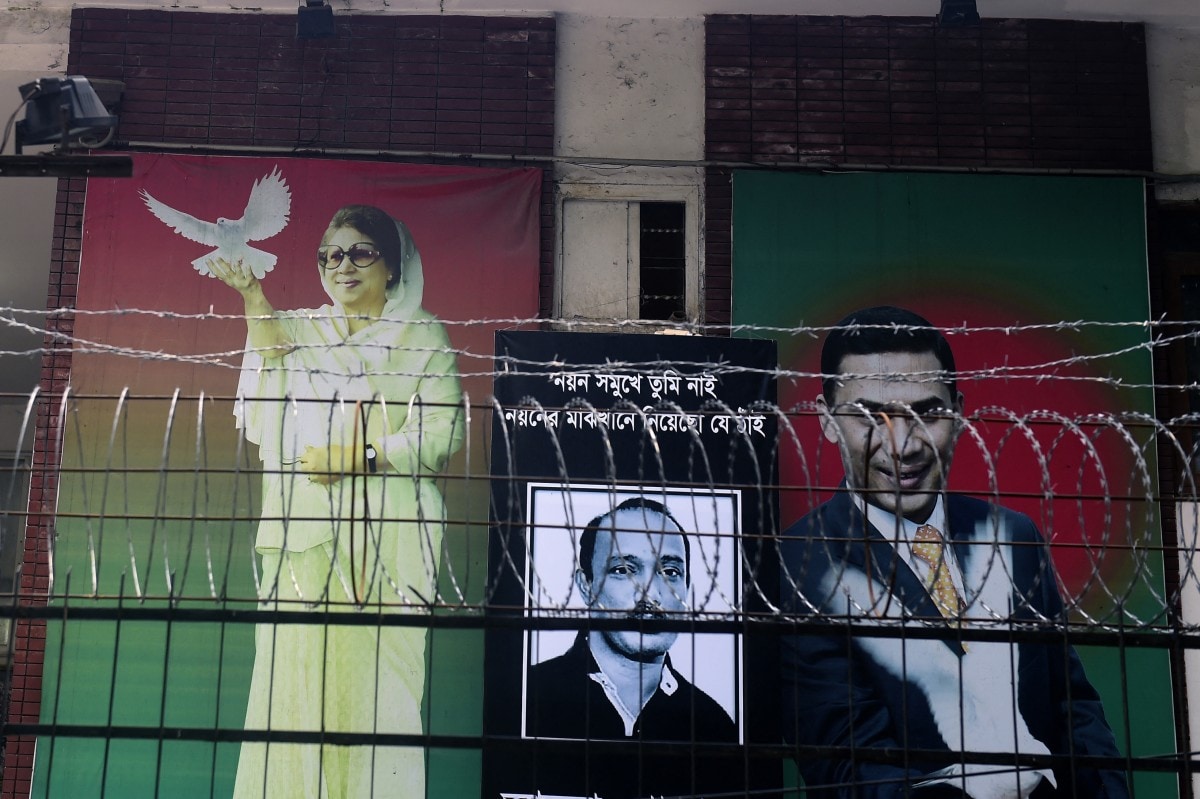
Photo Credit: AFP
In the face of opposition, Zia’s government brought an amendment to the constitution for making the provision to bring in a caretaker government for conducting parliamentary elections and handed the power to Justice Muhammad Habibur Rahman.
Under the polls that followed, BNP was defeated by Sheikh Hasina’s Awami League, and Zia became the Leader of the Opposition in the Jatiya Sangsad during the Awami League government. But she came back five years later with a surprise landslide win and was sworn in as the country’s prime minister for the third time on October 10, 2001.
Her second term was marred by the rise of Islamist militants and allegations of corruption. In 2004, a rally that Hasina was addressing was hit by grenades. Hasina survived, but over 20 people were killed and more than 500 wounded. Zia’s government and its Islamic allies were widely blamed.
In 2018, after Hasina had reclaimed Bangladesh’s highest office, Rahman was tried in absentia and sentenced to life for the attack. The BNP denounced the trial as politically motivated.
Although Zia later clamped down on Islamist radical groups, her second stint as prime minister ended in 2006 when an army-backed interim government took power amid political instability and street violence.
The interim government jailed both Zia and Hasina on charges of corruption and abuse of power for about a year before they were both released ahead of a general election in 2008.
Zia never regained power. With the BNP boycotting the 2014 and 2024 elections, her vitriolic feud with Hasina continued to dominate Bangladeshi politics.
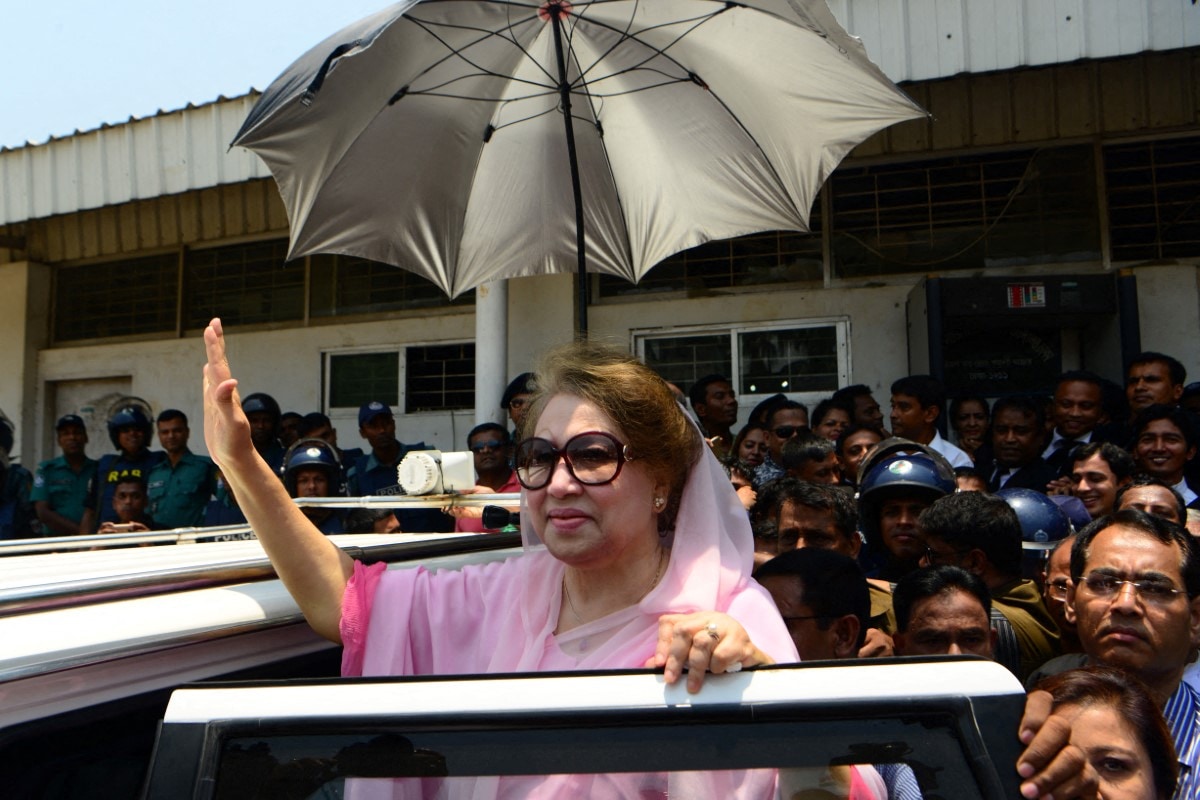
Photo Credit: AFP
Tension between their two parties often led to strikes, violence, and deaths, impeding the economic development of Bangladesh, a poverty-stricken country of about 175 million that is low-lying and prone to devastating floods.
In 2018, Zia, Rahman, and aides were convicted of stealing some $250,000 in foreign donations received by an orphanage trust set up when she was last prime minister—charges that she said were part of a plot to keep her and her family out of politics.
She was jailed but moved to house arrest in March 2020 on humanitarian grounds as her health deteriorated. Zia was freed from house arrest in August 2024 after Hasina’s ouster.
In early 2025, Zia and Rahman were acquitted by Bangladesh’s Supreme Court in the corruption case that resulted in the 2018 jail sentences. Rahman had been acquitted of the 2004 grenade attack on Hasina a month earlier.